

The Essentials of Commercial Building Construction
June 28, 2025
The Essentials of Commercial Building
Construction
Commercial construction begins not with
blueprints, but with important questions:
- Where should the
project be built?
- What is the estimated
cost?
- Who can deliver the
project on time and within budget?
If you’ve ever been part of a commercial
project—be it a retail outlet, office, or hospital—you know it’s more than just
bricks and concrete. It’s a complex sequence of decisions, permits, materials,
people, and timelines. If any element goes off track, the entire project can
stall.
This guide walks you through each phase of the commercial construction journey, helping you understand what really happens beneath the surface.
What is
Commercial Construction?
Commercial construction involves planning and
building spaces used for business or public purposes. Unlike homes, commercial
buildings prioritize utility, safety regulations, and high foot traffic. These
include:
- Offices (shared
workspaces, corporate headquarters)
- Healthcare
facilities (hospitals, clinics, diagnostic labs)
- Retail and
hospitality spaces (restaurants, showrooms, hotels)
- Warehouses and
industrial spaces (logistics centers, distribution hubs)
- Institutional
buildings (schools, colleges, community halls)
With the fast-paced growth in Maharashtra’s infrastructure sector, many developers rely on professional commercial contractors like SaiKrishna Construction to deliver reliable and scalable projects.
Key
Stakeholders in Commercial Construction
Every commercial project involves a team of
specialists:
- Client/Developer: The person or company
funding and initiating the project
- Architects & Engineers: Handle
structural integrity and design
- Commercial Builders: Manage site
operations and construction activities
- Government Authorities & Inspectors:
Oversee legal approvals and safety compliance
- Project Manager: Coordinates everything
to keep the project on track
Success depends on seamless coordination between these roles.
7
Phases of Commercial Construction
Here’s a simplified step-by-step overview of
the entire construction lifecycle:
1.
Development & Planning
- Choose the right
site based on soil condition, access, and zoning laws
- Create a realistic
budget and set aside 10–15% as a contingency
- Form your core team
early on
2.
Pre-Design
- Define space
requirements, utilities, and materials
- Prepare an initial
timeline and budget estimate
3.
Design Phase
- Architects draft
layouts and schematics
- Engineers plan
structural elements, utilities, and drainage systems
4.
Pre-Construction
- Secure necessary
permits and insurances
- Finalize contracts
with builders and suppliers
5.
Procurement
- Order construction
materials and equipment
- Account for
fluctuations in prices and supply chain delays
6.
Construction
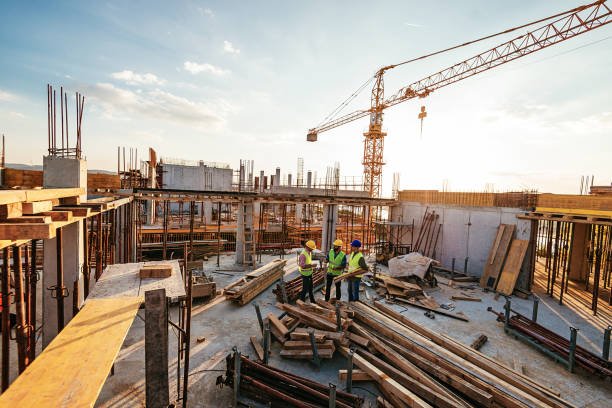
This is where physical work begins:
- Site preparation
(clearing, fencing, initial groundwork)
- Structural framing
(concrete or steel skeleton)
- Internal systems
(plumbing, electrical, HVAC, roofing)
- Finishing and
landscaping
7.
Post-Construction
- Conduct
walkthroughs and address final fixes (the “punch list”)
- Final inspection and obtain occupancy certificate
Cost
Drivers and Real-World Challenges
Main
Cost Factors
- Materials: Cement, steel, glass,
fixtures
- Labour: Skilled workers are crucial and
often costly
- Equipment: Site machinery such as cranes
and lifters
- Compliance: Safety, environmental, and
accessibility requirements
Common
Challenges and How to Tackle Them
- Budget overruns →
Add a buffer and monitor costs regularly
- Delays in timeline
→ Use prefabricated components where possible
- Safety issues →
Conduct regular safety meetings and audits
- Regulatory holdups → Obtain approvals in phases to avoid bottlenecks
Commercial
vs Residential vs Industrial Construction
Commercial
Construction
- Materials: Steel,
concrete, glass
- Regulations: Strict
safety and accessibility codes
- Equipment: Cranes,
hoists, heavy tools
- Use: Offices,
malls, hospitals
Residential
Construction
- Materials: Wood,
brick, basic finishes
- Regulations:
Moderate compliance
- Equipment: Light
tools and general labour
- Use: Houses,
apartments
Industrial
Construction
- Materials:
Reinforced concrete, metal cladding
- Regulations: Heavy
compliance with safety and environmental laws
- Equipment:
Specialized machinery
- Use: Factories, manufacturing units, warehouses
Best
Practices for Successful Commercial Construction
- Adopt Design-Build Model: A single team
handles both design and construction for better coordination
- Use Modern Technology: BIM models,
drones, and real-time project tracking reduce errors
- Focus on Durability: Invest in
high-quality materials to reduce long-term maintenance
- Embrace Sustainability: Use
energy-efficient systems and minimize construction waste
- Insure Everything: Coverage for property, workers, and project risks is essential
Why
Choose SaiKrishna Construction?
At SaiKrishna
Construction, we go beyond standard procedures. Our approach is about
anticipating challenges before they arise.
Here’s how we stand out:
- Shorten timelines
using prefabrication techniques
- Track budgets in
real-time using digital dashboards
- Handle complex
issues like contaminated soil proactively
- Ensure regulatory
compliance throughout the build
Based in Chhatrapati Sambhaji Nagar and serving all of Maharashtra, we offer start-to-finish services for commercial construction—ensuring reliability, transparency, and high-quality results.
Final
Thoughts
Commercial construction isn’t just about
building a structure—it’s about creating long-lasting value. Whether it's an
office that drives innovation or a hotel that welcomes thousands, the space you
build should serve both purpose and people.
SaiKrishna Construction is your trusted partner for commercial building projects across Maharashtra—from concept to completion.
FAQs
1. What
is commercial construction?
It involves building structures used for business or public activities, such as
malls, offices, hotels, hospitals, and warehouses.
2. How
long does it take to complete a commercial project?
Smaller projects may take a few weeks, while large-scale developments can take
over a year.
3. How
is commercial construction different from residential?
Commercial construction uses industrial-grade materials, follows stricter
regulations, and is designed for public or business use.
4. What
are the biggest challenges in commercial construction?
Budget overruns, permit delays, material shortages, and coordination issues are
common.
5. Why
should I choose SaiKrishna Construction?
We offer end-to-end commercial construction solutions, real-time project
tracking, and proactive problem-solving across Maharashtra.

Comments
No comments yet. Be the first to comment!